
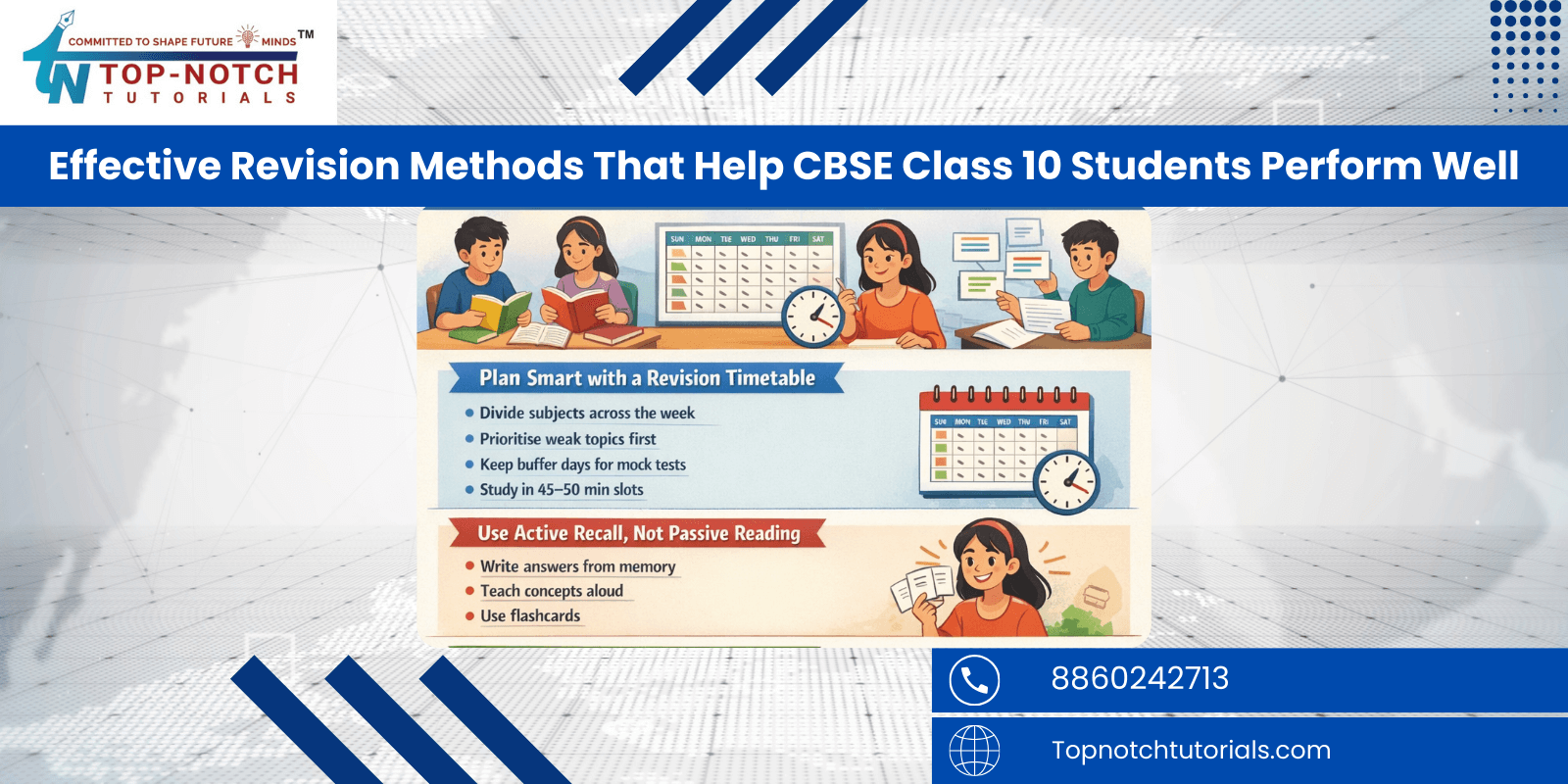
If you ask most Class 10 students what scares them about board exams, they usually don’t say the syllabus. They say revision. Not knowing what to revise, when to revise, or whether what they revised will actually stay in their head on exam day. A lot of students work hard but still walk out of the exam hall feeling like their mind went blank. That usually has less to do with intelligence and more to do with how revision was handled. Whether a student studies on their own, with school teachers, or through the best online coaching for class 10 CBSE, revision decides the final outcome more than anything else.
The problem is that revision is often treated as a final stage, something to do after “real studying” is over. In reality, revision should run parallel to learning from the very beginning.
Revisit Chapter In Small Intervals
When chapters are studied once and then ignored for months, the brain quietly lets go of that information. Students don’t realise this until they sit down to revise and feel like they are reading the chapter for the first time again. That is where panic starts. A more realistic approach is to revisit chapters in small intervals. Not for hours. Sometimes just 15 or 20 minutes is enough.
Revising soon after learning something creates familiarity. Coming back to it again after a week makes it stick. By the time exams arrive, those chapters no longer feel new or heavy. This method also spreads the pressure. Instead of one massive revision phase, the workload gets divided naturally.
Revision Is Not Reading, It Is Recalling
One reason revision feels tiring is because students confuse it with reading. Sitting with a book open and scanning lines does not challenge the brain. It feels safe, but very little is retained. Real revision happens when the book is closed. Trying to remember formulas, writing short answers from memory, explaining concepts aloud, or solving questions without seeing the solution forces the brain to work. It feels uncomfortable at first, but this discomfort is what improves recall. If you can explain a concept in simple words without checking the book, that topic is already half prepared.
Make Short Notes
Many students rewrite entire chapters during revision and feel productive. In reality, they are spending time on things they already understand. Short notes should focus only on what is easy to forget. Definitions, formulas, reactions, dates, and tricky points. Nothing more. These notes should be brief enough to revise quickly but clear enough to trigger memory.
Never Ignore NCERT
Revision should always come back to NCERT. Read the examples, in-text questions, activities, and summary sections carefully. Many students lose marks not because they didn’t know the answer, but because they wrote it differently from how CBSE expects it. Clarity matters more than fancy explanations.
Make Sure To Do Writing Practice
A student may know an answer perfectly but still lose marks due to poor structure or incomplete steps. This happens when writing practice is ignored. During revision, answers should be written at least occasionally under time pressure. This helps manage speed and improves presentation. It also highlights gaps that reading alone never shows. For theory subjects, learning how to start and end answers neatly makes a real difference. For numericals, writing steps properly avoids unnecessary mark loss.
Solve Sample Papers and Analyze Them
Solving sample papers back to back without reviewing mistakes does very little. The real learning comes after checking the paper. Mistakes should be noted honestly. Was it a concept issue, a silly error, or lack of time? Writing these mistakes down and revising them later prevents repetition. This also helps identify weak areas early enough to fix them.
Do Not Study For Long Hours
Long hours without breaks reduce efficiency. The brain needs time to process what it has learned. Short breaks, proper sleep, and basic movement help more than students realise. During exams, a tired brain struggles to recall information even if it was revised well. Rest is part of preparation, not a waste of time.
Be Consistent and Motivated
Some days revision will feel easy. Some days it will feel pointless. This is normal. Waiting to feel motivated does not work. Showing up daily, even for a short session, builds momentum. Small effort done regularly always beats occasional heavy study days.
Conclusion
Board exam revision does not need to be dramatic or exhausting. It needs to be honest, regular, and focused on recall rather than reading. Students who revise calmly over time walk into exams with familiarity instead of fear. Marks improve not because of last-minute pressure, but because the brain has already seen the material enough times to trust itself.